
Long Claim Processing Times? AI Can Automate 70% of Insurance Claims Reviews
Boost Efficiency and Slash Claim Processing Times: How AI Can Automate Over 70% of Insurance Claims and Drive Industry Transformation.


Long claim processing times have been a persistent issue in the insurance sector, leading to increased customer dissatisfaction. Studies indicate that up to 60% of customers report frustration when claim settlements take longer than expected. Meanwhile, insurers are dealing with rising operational costs, which are projected to reach $125 billion globally for claims processing alone.
However, AI is reshaping the landscape by automating large portions of these tasks. In fact, AI-based automation has already demonstrated the ability to handle up to 70% of claims reviews, significantly reducing both costs and processing times. This is achieved through technologies like optical character recognition (OCR), fraud detection algorithms, and predictive claims models.
In the following sections, we’ll explore how AI optimizes every step of the claims process, addressing common challenges and unlocking new efficiency levels for insurers.
How AI Revolutionizes Insurance Claims Processing?
AI technologies are transforming the traditional claims process into a streamlined, efficient workflow. According to McKinsey, insurers using AI have reduced claims processing times by up to 30%, with operational costs dropping by 20% to 25%. Let’s break down how AI improves each stage of claims management.
1. Claim Submission and Data Extraction
AI tools such as OCR automate the extraction and validation of claim documents. This reduces human error and improves accuracy.
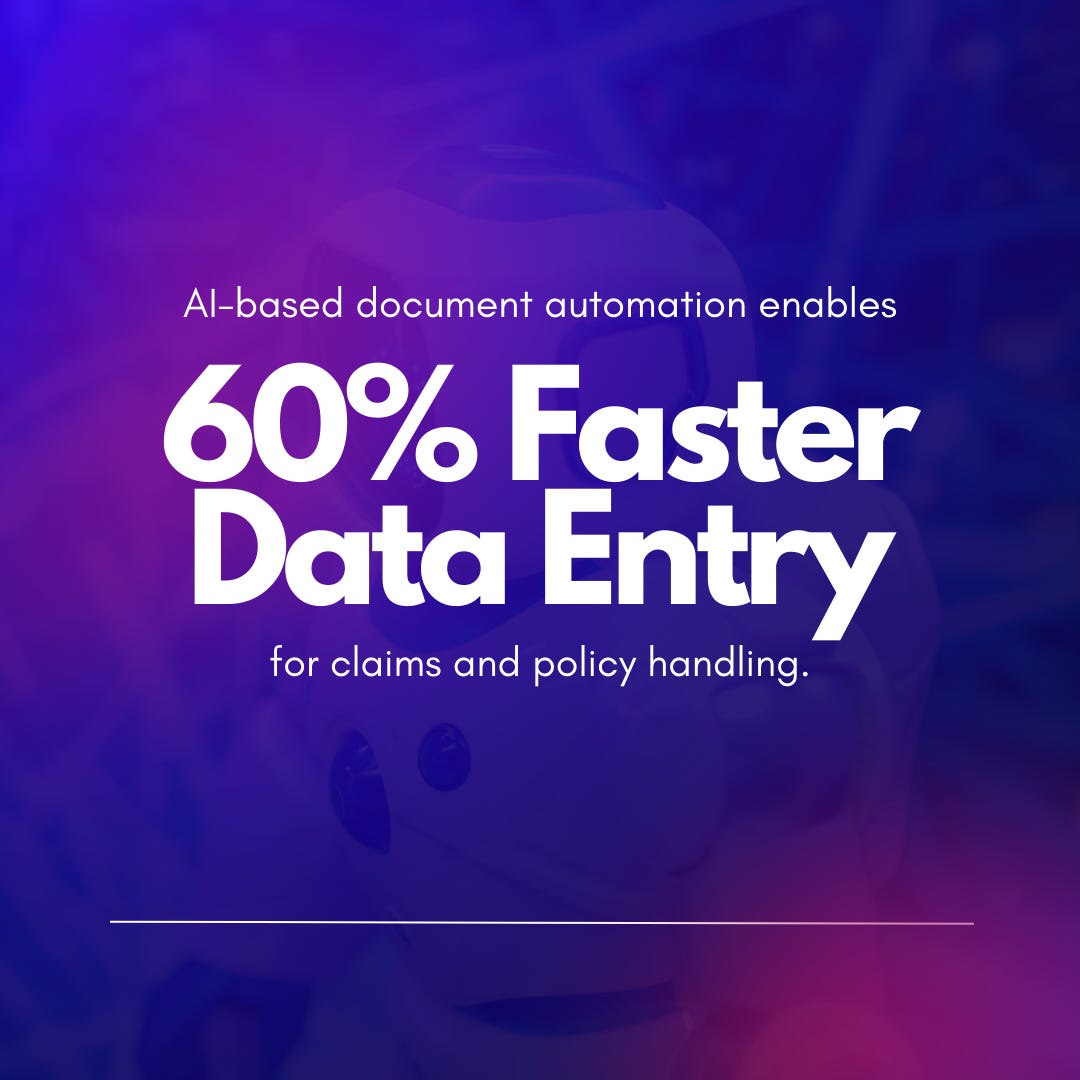
Statistic: Companies using AI-powered document management report 60% faster data entry (Infosys).
Example: AI scans uploaded documents and extracts key data, such as policy numbers and accident details, in seconds.
2. Fraud Detection & Risk Assessment
AI models analyze historical data to detect fraudulent claims by identifying patterns of irregularities. Insurers now report up to 50% fewer false claims using predictive models (Swiss Re).
Fraud costs the insurance industry billions annually, but AI can detect anomalies much earlier than human teams can.
3. Claims Review & Decision Automation
Machine learning models can automatically assess the validity of claims based on predefined rules and past cases.
Statistic: Claims handled by AI are completed up to 4x faster than manual reviews (Accenture).
AI ensures that routine claims are approved or denied automatically, leaving only complex cases for manual review.
Benefits of AI-Driven Insurance Claims Processing
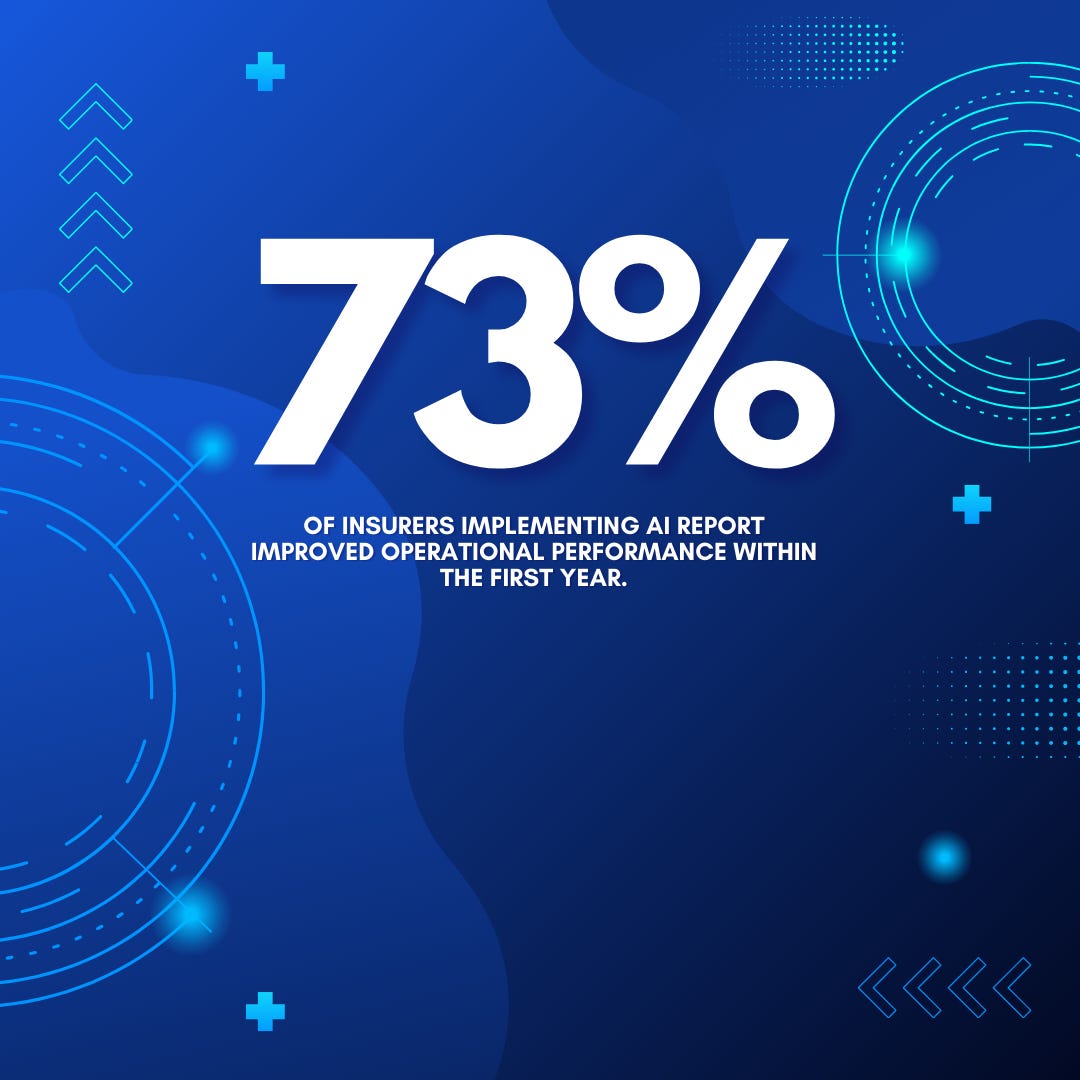
AI-driven automation in claims processing provides numerous advantages for insurers, including increased efficiency, enhanced customer satisfaction, and significant cost savings. According to a report by Deloitte, 73% of insurers who have implemented AI solutions experienced improved operational performance within the first year.
1. Increased Operational Efficiency
AI automation enables insurance companies to handle a higher volume of claims without scaling costs proportionally.
Statistic: Companies implementing AI-based claims management systems report 30% to 40% faster processing times (Precedence Research).
AI automates repetitive tasks like document verification, allowing human adjusters to focus on higher-value cases.
2. Enhanced Customer Experience
Faster processing times and automated status updates enhance the overall customer journey, leading to higher retention rates.
Statistic: Customer satisfaction scores (NPS) improved by 40% for companies utilizing AI chatbots and claims automation (Infosys).
AI-powered chatbots provide real-time updates and claim status checks, reducing inbound call center inquiries.
3. Cost Savings and Scalability
By reducing manual labor and automating key processes, insurers save both time and money.
Statistic: AI is projected to reduce administrative costs by $20 billion annually across the insurance industry by 2030 (McKinsey).
AI systems also scale easily, making them suitable for both small and large insurance firms.

AI Use Cases: Real-Life Examples
In addition to claims automation, AI is being applied across various insurance operations, including training and employee development. Biz4Group developed an innovative solution called TrainWell AI to address training challenges for insurance professionals.
Case Study: Insurance AI - Smart Training Solution for Insurance Professionals
The client, a prominent insurance company, required an advanced training platform that could personalize learning paths for employees based on their individual progress and knowledge gaps. Biz4Group created TrainWell AI, a cutting-edge solution designed to automate and optimize the training process through AI and machine learning.
Key Features of TrainWell AI:
AI-Driven Content Personalization: Custom learning paths generated based on real-time assessments of employees' performance.
Gamified Learning Experience: Integrated game-based modules to enhance engagement and motivation.
Real-Time Analytics & Reporting: Managers received data-driven insights into employee progress, skill development, and training effectiveness.
Project Outcomes:
Training completion rates improved by 45% within six months.
Employee engagement increased by 60% due to the personalized, gamified approach.
Reduced onboarding and training time for new hires by 30%.
This project showcases how insurance automation software development can drive transformation, even beyond claims automation, by improving core operations.
Challenges in Implementing AI for Insurance Claims
While the benefits of AI automation are significant, insurers may face several challenges when integrating AI solutions into their existing systems. According to Accenture, 60% of insurers report difficulties related to data integration, compliance, and employee training. However, addressing these challenges early can help maximize the ROI of AI technology.

1. Data Integration and Legacy Systems
Many insurance companies operate on outdated legacy systems, which makes integrating AI solutions complex.
Statistic: 55% of insurers cite legacy system limitations as a major barrier to AI adoption (Infosys).
Solution: Migrating to modern cloud-based platforms can facilitate seamless AI implementation.
2. Compliance and Regulatory Issues
AI systems must adhere to strict regulations regarding data privacy, transparency, and fairness.
Statistic: Non-compliance risks lead to 30% slower AI adoption for insurers (Deloitte).
Solution: Implementing explainable AI (XAI) can help demonstrate compliance by making AI decisions transparent.
3. Workforce Adaptation
Employees may resist AI adoption due to fears of job displacement or a lack of understanding of AI tools.
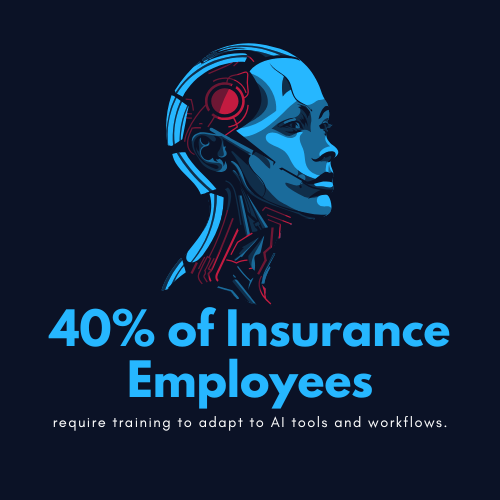
Statistic: 40% of employees in the insurance sector require training to work effectively with AI solutions (Swiss Re).
Solution: Providing regular training sessions and clarifying that AI complements rather than replaces human efforts can address these concerns.
Future Trends in AI Automation for Insurance
The role of AI in insurance is set to expand significantly in the coming years. Experts project that by 2030, AI will be a core part of 90% of all insurance processes, ranging from claims and underwriting to fraud detection and personalized policy offerings. Here's a closer look at the trends shaping the future of AI automation in insurance.
1. AI-Driven Personalized Policies
AI will enable insurers to offer more customized policies by analyzing real-time data from various sources, such as IoT devices and user behavior.
Statistic: The global generative AI market in insurance is projected to reach $7.5 billion by 2028 (Precedence Research).
Personalization leads to better customer engagement and improved policy renewals.
2. Advanced Fraud Detection Models
Future AI systems will leverage machine learning to predict and prevent fraud before it occurs.
Statistic: AI models are expected to reduce fraud losses by up to 70% by 2030 (Accenture).
3. Integration with Predictive Analytics
AI will increasingly be used to predict claim risks, allowing insurers to take proactive measures.
Statistic: Insurers using predictive analytics reported a 50% reduction in claims risks (Swiss Re).
4. Conversational AI and Chatbots
AI-powered chatbots will continue to improve, providing real-time customer support and claim status updates.
Statistic: The use of insurance chatbots is expected to grow by 40% over the next five years (Infosys).
Conclusion: Answering the Question – Can AI Really Handle 70% of Claims?
AI technology has already proven its capability to automate up to 70% of insurance claims reviews, significantly reducing the burden on human adjusters. From improving operational efficiency and fraud detection to enhancing customer experiences, AI automation is reshaping how insurers operate.
While challenges such as legacy systems and compliance need to be addressed, the future looks bright for insurers embracing AI. Reports from McKinsey and Accenture indicate that companies investing in AI automation have seen substantial improvements in claims processing speed, customer satisfaction, and cost efficiency.
As the insurance industry moves towards full-scale AI integration, now is the time for insurers to adopt solutions tailored to their needs. Companies like Biz4Group, a leading AI development company, provide cutting-edge services to help insurance providers stay ahead of the curve.
Sources
Precedence Research: Artificial Intelligence in Insurance Market
Infosys BPM: Game-Changing Influence of AI in Insurance
Swiss Re: Evolution of AI in Insurance
Risk & Insurance: Study on Increasing AI Adoption in Insurance